
English| EUR
Suggested for you
More currencies
Choose a language
The Krabi 4 Islands loop—Phra Nang Cave Beach, Chicken Island, Tup Island, and Poda Island—runs on tidal cycles, snorkeling conditions, and the shared rhythm of dozens of longtail boats departing Ao Nang each morning. Timing your departure shapes everything: water clarity at the coral gardens, elbow room on the sandbars, and whether you return sunburnt or exhilarated. This guide walks you through the daily schedule and the narrow window that delivers the best version of the trip.
Quick answer
Tours operate daily from 08:00 to 16:30, with most longtail boats departing Ao Nang between 09:00 and 10:00 for the four-island circuit. The ideal arrival window is 08:00–10:00, positioning you to reach Chicken Island and the Tup-Mor sandbar connection before the midday rush and maximizing snorkeling visibility while the Andaman Sea remains calm. Afternoon departures face stronger currents, harsher light, and crowded mooring points at Phra Nang Cave.
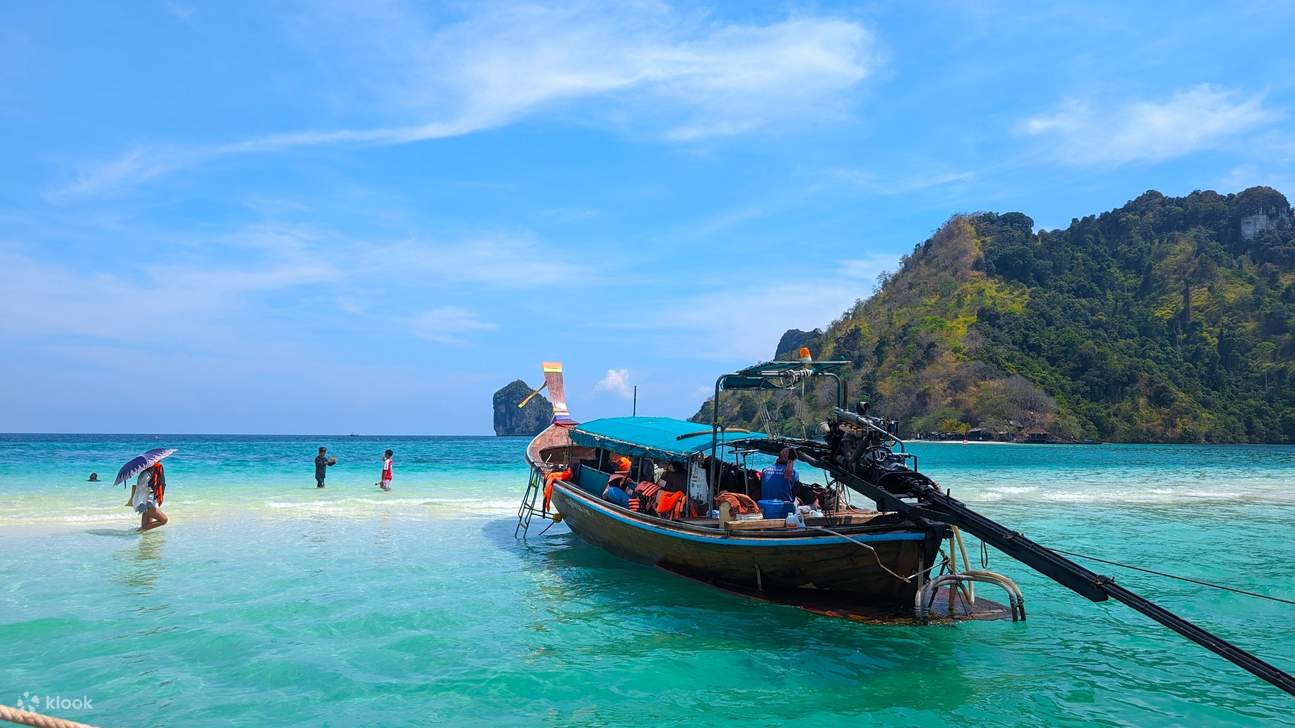
The Krabi 4 island tour timings are dictated not by printed schedules but by the Andaman Sea's tidal rhythm and the operational cadence of Ao Nang's longtail fleet. Most operators load passengers between 08:30 and 09:30, aiming to clear the bay before the sun climbs past comfortable and the limestone karsts cast short, hard shadows. The four-island route is a fixed geographic sequence—Phra Nang Cave Beach, Chicken Island, the Tup-Mor sandbar crossing, and Poda Island—covering roughly twelve nautical miles in six to seven hours, tide and current permitting. Departure timing determines snorkeling quality. Early-morning water around Chicken Island's coral beds holds better visibility, with sediment settled overnight and fewer fins stirring the shallows. By 11:00, the mooring zone fills with a second wave of boats, and the underwater scene turns cloudy. The sandbar connecting Tup Island and Mor Island—a fleeting land bridge exposed only at low tide—appears for roughly three hours per cycle. Miss the window and you photograph it from a distance. Operators build the four-island circuit around these tidal gates, but individual boat schedules vary by a half-hour or more depending on group size and pickup logistics. The return leg to Ao Nang begins between 14:30 and 15:30, giving most tours five to six hours on the water. Afternoon light favors photography at Poda Island's powdered beach, though the heat by then is unforgiving and shade is limited to the tree line. Tours departing after 10:00 compress the schedule, often skipping extended snorkeling stops to stay within the 08:00–16:30 operational boundary set by Hat Noppharat Thara-Mu Ko Phi Phi National Park. The national park conservation fee of 400 THB per foreign adult is collected at the first island landing, independent of your departure time. Planning around krabi 4 island tour timings means choosing the trade-off you can live with: early starts reward you with emptier beaches and clearer water, while late-morning departures let you sleep in but deliver a more crowded, rushed version of the same route. The four-island loop is not customizable—every boat follows the same sequence—so your leverage lies entirely in when you board.
“Departure timing determines snorkeling quality: early-morning water around Chicken Island holds better visibility, with sediment settled overnight and fewer fins stirring the shallows.”
The Krabi 4 Islands tour operates on a consistent schedule throughout the week. Tours follow these standard daily operating hours.
Most operators depart Ao Nang between 08:00 and 09:00, returning by late afternoon. This sequence follows a typical clockwise route that places snorkeling at Poda Island before midday heat builds.
Vans collect guests from Ao Nang and Krabi Town hotels, arriving at the departure pier by 08:30. Expect a short safety briefing before boarding the longtail boat.
First stop at Railay's iconic beach beneath limestone cliffs. Swim time is typically 45 minutes; arrive early to explore the cave shrine before other groups.
Coral gardens on the island's northwest side offer the clearest visibility in morning light. Plan 60–75 minutes for snorkeling and a beach break.
Named for its rock formation, this is a brief 20-minute pause for photos and a look at the shallow sandbar connecting to Tup Island at low tide.
Operators serve a simple Thai buffet on one of the beaches. Meals last around 45 minutes.
If tide permits, walk the exposed sand bridge linking Tup and Mor Islands. Allocate 30 minutes before the return journey.
Boats head back as afternoon winds pick up. You'll reach the pier by 16:00, with hotel drop-offs completed by 16:30.
Confirm these logistics before your departure to streamline the maritime excursion.
Everything you need to know about krabi 4 island tour timings
Most departures for the Krabi 4 Islands occur within the morning hours to take advantage of favorable sea conditions. You can generally expect these trips to follow a schedule that allows for exploration throughout the day before returning to the mainland by late afternoon.
We recommend following the best arrival window of 08:00–10:00 to avoid mid-day heat and peak afternoon crowds at popular snorkeling stops. Planning your visit early ensures a more relaxed experience at the various marine landmarks.
Yes, all foreign visitors are required to pay a 400 THB national park conservation fee. This payment is separate from any boat operator charges and supports the maintenance of Hat Noppharat Thara-Mu Ko Phi Phi National Park.
While the park remains open until 16:30, afternoon visits may encounter higher volumes of tourists and stronger sun exposure. If you prefer a quieter experience, adjusting your Krabi island boat tour schedule to earlier in the day is advised.
Yes, these excursions are often family-friendly, though it is important to consider the sun exposure and sea conditions. Always check with your local boat operator regarding specific safety gear and requirements for younger travelers.
A common mistake is ignoring the recommended morning arrival, which leads to overcrowding at the main snorkeling sites. Adhering to suggested krabi 4 island tour timings helps visitors avoid the largest waves of tourists who arrive later in the day.